


Last updated: July 2026
This article explains what Indonesia’s Smartraveller travel advisory means for a school expedition to Mount Rinjani, why the elevated-risk Papua rating does not apply to Lombok, and how to interpret advisory updates before departure. Written for Heads of Outdoor Education, Deputy Principals, and risk-management committees evaluating an Indonesia-based program.
Key Takeaways
- Indonesia currently holds a level 2 “Exercise a high degree of caution” rating on Smartraveller, the Australian Government’s four-level travel advisory scale.
- The only Indonesian region rated higher — “reconsider your need to travel” — is Central Papua and Highland Papua, roughly 2,500km from Lombok with no bearing on a Rinjani itinerary.
- Smartraveller names Mount Rinjani specifically as a trekking route on or near active volcanic terrain, alongside Bali’s Agung and Batur and East Java’s Bromo and Ijen — a standing note, not a Rinjani-specific warning.
- Volcanic activity is monitored in near real-time by MAGMA Indonesia and the Bureau of Meteorology’s Darwin Volcanic Ash Advisory Centre.
- A country-wide advisory level is one input for a school risk committee, not a verdict on a specific region or itinerary.
The Indonesia travel advisory currently sits at ‘Exercise a high degree of caution’ on Smartraveller — the Australian Government’s second of four advisory levels. This rating is driven by country-wide factors (petty crime, natural disasters, isolated terrorism risk) and by a specific “reconsider your need to travel” flag for Central Papua and Highland Papua — a region roughly 2,500km from Lombok with no bearing on a Rinjani expedition itinerary. For school risk-management committees, the practical takeaway is: Indonesia’s national rating is one input, not a verdict on Lombok, and it needs to be read alongside what the advisory actually says about your specific region and activity.
This is the single most common blocker we see when a school’s board or insurer reviews an expedition proposal for the first time — someone searches “Indonesia travel advisory,” sees a caution level, and stalls the approval. This guide is designed to be handed straight to that committee.
Table of Contents
What Smartraveller’s Levels Actually Mean
Smartraveller — the Australian Government’s official travel advisory service — rates every destination on a four-point scale:
- Exercise normal safety precautions — the same baseline advice given for most of Western Europe, Japan, or New Zealand
- Exercise a high degree of caution — heightened awareness recommended, but travel proceeds normally for the vast majority of visitors
- Reconsider your need to travel — applied to specific regions or situations where risk is materially elevated
- Do not travel — the highest level, reserved for active conflict zones or acute crises
Indonesia as a whole currently sits at level 2. That is the same tier as many established European and Southeast Asian destinations schools already send students to — it is not, by itself, a red flag.
Why Indonesia Is Rated Where It Is
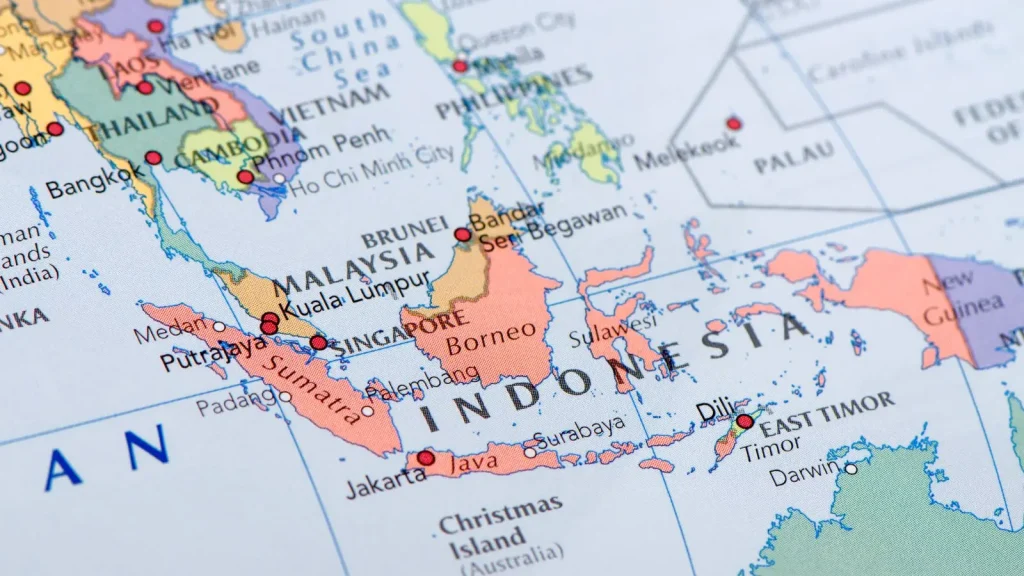
The rating reflects three recurring, country-wide themes: an elevated (if historically rare) terrorism risk, Indonesia’s position in an active seismic zone with frequent earthquakes and occasional tsunamis, and the country’s high concentration of active volcanoes. None of these factors are unique to Lombok — they describe Indonesia as a whole, in the same way a national US advisory reflects conditions from New York to rural Montana without saying much about either specifically.
The advisory does call out drownings at popular beaches — including in Bali, Lombok, and the Gili Islands — as a real and recurring risk. That’s directly relevant to any itinerary with a coastal or island component, and worth building into your own risk assessment regardless of what the headline country rating says.
The One Region Rated Differently — and Why It Doesn’t Touch Your Itinerary
The only part of Indonesia carrying an elevated “reconsider travel” rating is Central Papua and Highland Papua, due to ongoing civil unrest. Geographically, that’s the equivalent of a school planning a trip to Perth being asked to account for a travel warning covering Papua New Guinea. It is a different island group, a different set of provinces, and has no operational overlap with a Lombok-based itinerary. If a risk committee raises “the Indonesia advisory” as a blocker, this is usually the first thing worth clarifying — the elevated-risk region isn’t the one your students are visiting.
Volcanic Activity: What the Advisory Says, and What It Means for Rinjani Specifically
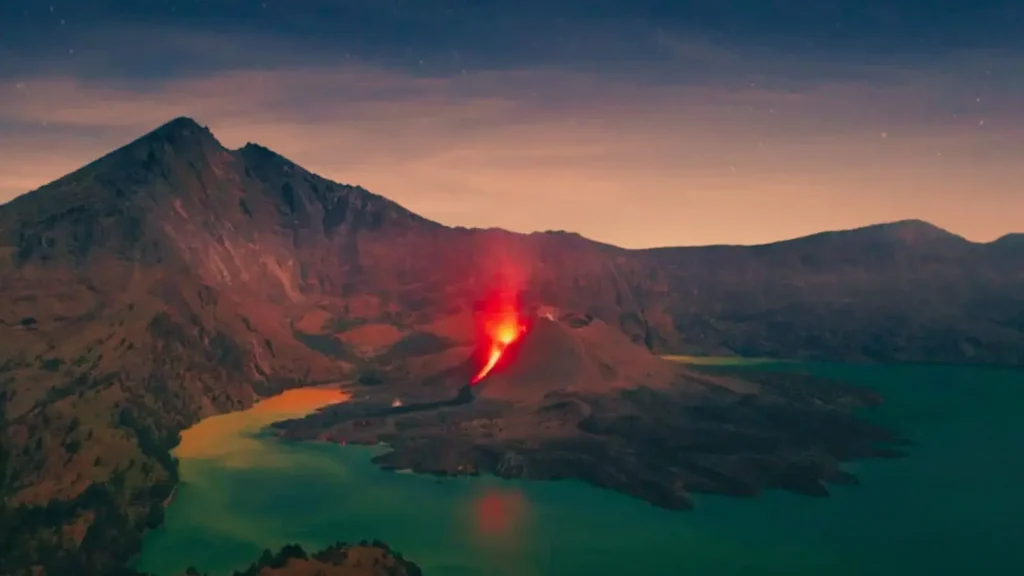
Smartraveller explicitly lists Mount Rinjani among Indonesia’s trekking routes that sit on or near an active volcano, alongside Bali’s Mount Agung and Mount Batur, and East Java’s Mount Bromo and Mount Ijen. This isn’t a warning specific to Rinjani — it’s a standing note that applies to most of Indonesia’s popular trekking destinations, and it comes with a clear, actionable process rather than a blanket caution:
- Exclusion zones around active volcanoes can change quickly and should be checked immediately before travel
- Status updates are published by Indonesia’s MAGMA monitoring service and the Bureau of Meteorology’s Darwin Volcanic Ash Advisory Centre
- Local authorities should be consulted before visiting any area near volcanic activity
This is precisely the kind of monitoring built into a properly run expedition’s pre-departure and on-ground protocols — it’s a process to follow, not a reason to avoid the destination. (See our risk management framework for how this fits into a full pre-expedition safety plan.)
How to Read the Next Update
Advisories are reviewed periodically and can shift with little warning — sometimes for reasons entirely unrelated to Lombok (a political event in Jakarta, an eruption on another island). Before treating any Indonesia travel advisory update as a reason to reconsider a booking, a risk committee should check three things:
- Which region does the update actually name? Country-wide advisories often bundle unrelated regional issues under one national rating.
- Has the overall level number changed, or just the supporting detail? A rewritten paragraph under an unchanged level 2 rating is a much smaller signal than an actual level change.
- What do the operational sources say? MAGMA Indonesia and the Volcanic Ash Advisory Centre are the primary sources for anything volcanic — they update faster and more specifically than the general country advisory.
How This Fits Into a Venture Beyond Program
Because Venture Beyond operates the ground team in Lombok directly rather than outsourcing to a third-party operator, advisory and conditions monitoring isn’t a once-a-year checklist item — it’s a standing part of how every program is run, cross-checked against the same government and volcanic-monitoring sources referenced above ahead of every departure. If conditions changed in a way that affected a specific component of a program, that’s a conversation we’d have with your school directly, not something discovered after arrival.
FAQ
Does Indonesia’s Smartraveller rating mean school trips to Lombok aren’t allowed?
No. Indonesia’s level 2 “exercise a high degree of caution” rating is a country-wide baseline comparable to many established destinations. It reflects national-level factors, not a specific warning against Lombok or Rinjani.
Is Mount Rinjani mentioned specifically in Australian government travel advice?
Yes — it’s named alongside several other Indonesian volcanoes as a trekking route on or near active volcanic terrain, with standard guidance to check exclusion zones and monitoring sources before travel.
Does the Papua travel warning affect a Lombok expedition?
No. The elevated advisory applies specifically to Central Papua and Highland Papua, which are separate provinces with no geographic or operational connection to a Lombok-based itinerary.
How often should a school re-check the advisory before departure?
As part of standard pre-departure planning, ideally within the weeks immediately before travel, cross-referenced with volcanic monitoring sources if the itinerary includes trekking near Rinjani.