


Article Summary
This article compares Lombok, Indonesia and Nepal as overseas expedition destinations for independent schools. It covers flight logistics, altitude and terrain, cost, cultural context, program flexibility, and safety considerations. Written by Angus Lawrence, Founder and Director of Venture Beyond Expeditions, an Australian-registered school expedition specialist, and co-founder of Rinjani Dawn Adventures, an award-winning guiding company based on Lombok.
Table of Contents
Why Independent Schools Are Choosing Lombok Over Nepal for Overseas Expeditions
For many years, Nepal has been the default answer when independent schools go looking for a serious overseas trekking expedition. Everest Base Camp. The Annapurna Circuit. High altitude. Impressive names. The kind of trip that looks good in a school prospectus.
But in the last several years, a growing number of independent schools in Singapore and Australia have been quietly choosing Lombok, Indonesia instead. Not because Nepal is wrong, but because Lombok is right in ways that matter specifically to school groups.
This article sets out the practical comparison. Not a destination pitch. A genuine look at why Lombok, and specifically Mount Rinjani, has become a serious choice for Heads of Outdoor Education evaluating overseas expedition programs.
Flight Time and Logistics
Nepal requires flying into Kathmandu, typically via a hub such as Singapore, Bangkok, or Kuala Lumpur. For schools based in Singapore, that is a minimum of five to six hours of flying plus a connection. For schools in Australia, it is eight to ten hours or more.
Lombok is a direct or one-stop flight from Singapore of around two hours. From major Australian cities, it is three to four hours, often with a single connection through Bali.
For schools managing duty of care, travel risk, and parent communication, shorter travel time is not a trivial advantage. It means less time in transit, fewer connection risks, lower fatigue on arrival, and faster emergency repatriation if it were ever needed.
Lombok’s Zainuddin Abdul Madjid International Airport handles regular commercial traffic. Ground transfer to the Sembalun region takes approximately 2.5 hours by private vehicle. Transfer to Senaru, the alternative trailhead on the northern side of the mountain, takes approximately 3 to 3.5 hours. Both are straightforward road transfers on established routes. The logistics are well-established and predictable.
Altitude and Terrain
This is where many schools make the comparison incorrectly.
Nepal’s reputation for altitude is built on routes that reach well above 4,000 metres and in some cases above 5,000. Everest Base Camp sits at 5,364 metres. For student groups, this altitude range introduces genuine acclimatisation requirements, longer trip durations, and meaningful high-altitude medical risk including acute mountain sickness.
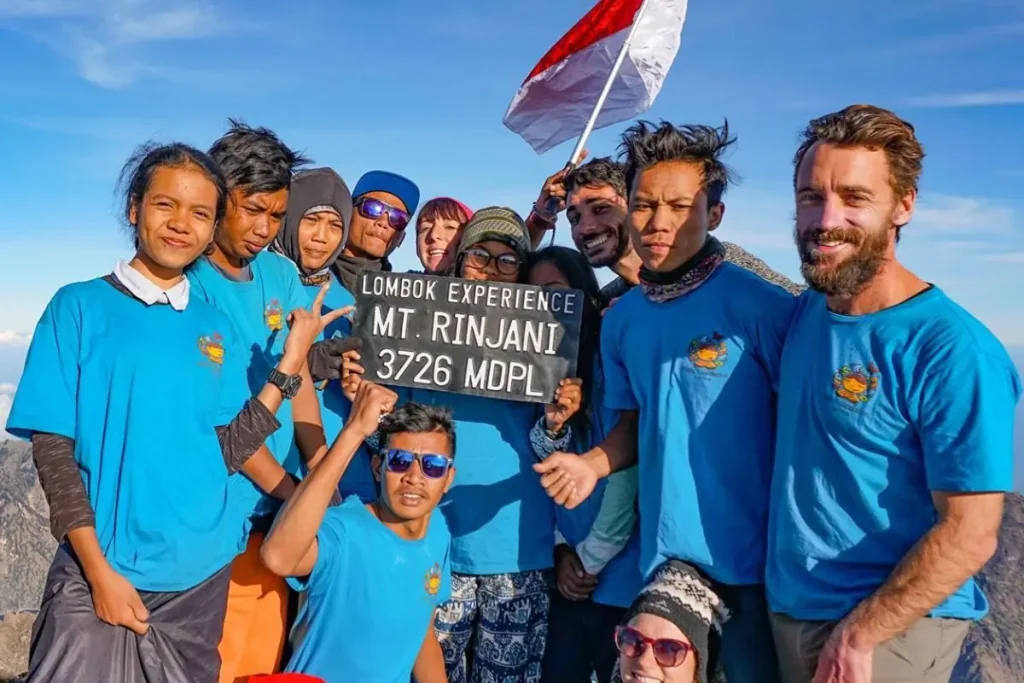
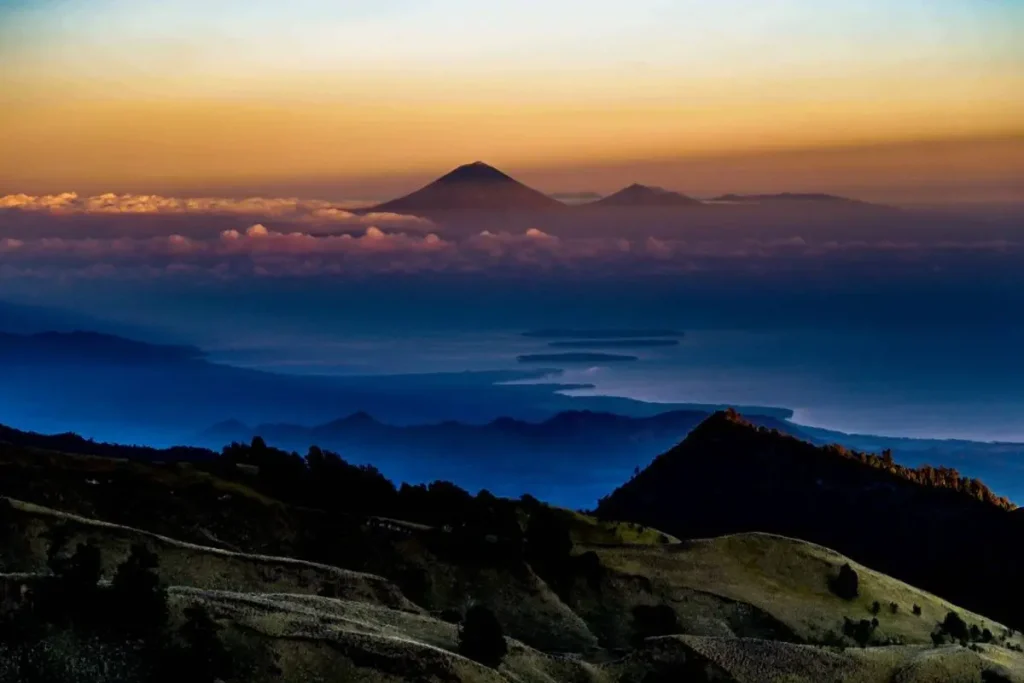
Mount Rinjani’s summit stands at 3,726 metres, Indonesia’s second highest peak. That is a serious altitude. Students attempting the full summit will feel it, and physical preparation matters. But it sits below the threshold where high-altitude cerebral and pulmonary oedema become significant concerns for otherwise healthy, prepared students.
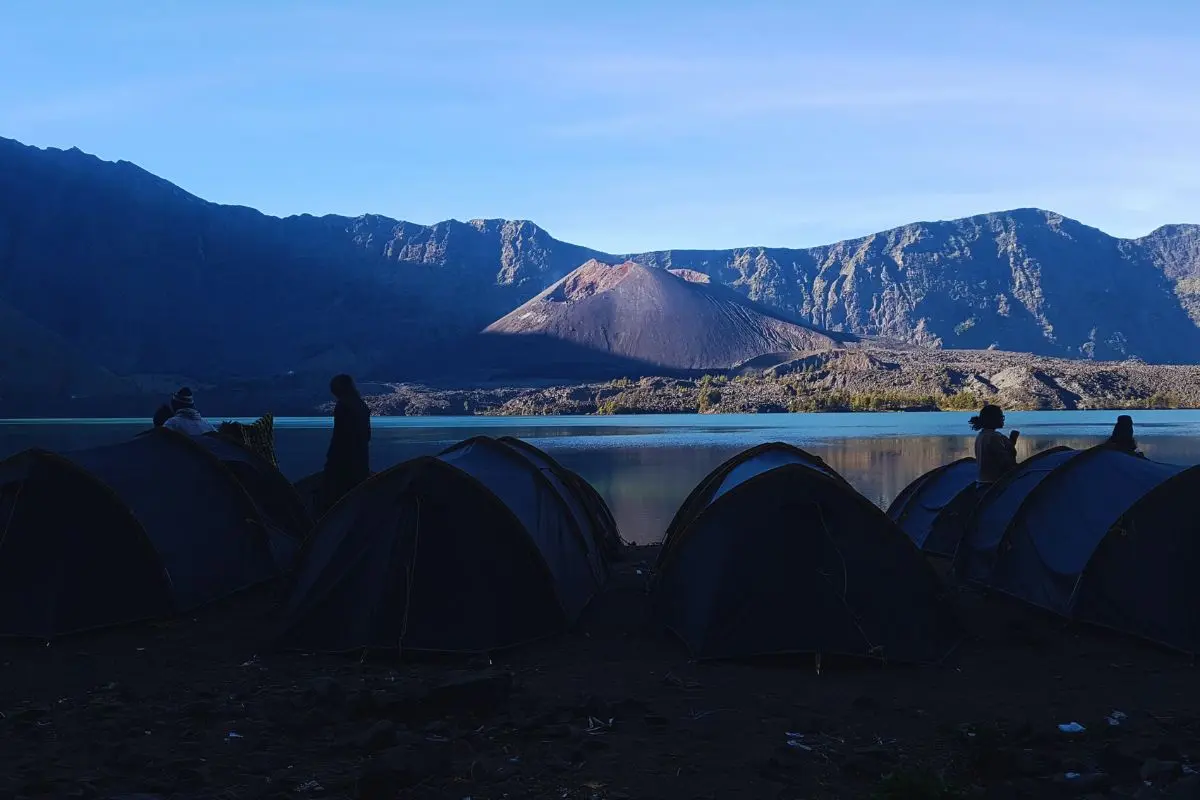
The Rinjani Crater Rim, at approximately 2,641 metres, is the standard destination for school groups on a first or second Lombok expedition. The route climbs through dense tropical rainforest before opening onto the crater rim, where students camp overnight at one of the most striking viewpoints in Southeast Asia. From the rim, the view stretches across the vast caldera to Lake Segara Anak below and Mount Barujari, an active volcanic cone rising from the crater floor. It is a demanding two to three day trek, but not a technical one. The experience is earned through sustained effort, not specialised skill, which makes it well-suited to well-prepared secondary students.
Rinjani also offers a third option not available in Nepal at comparable cost: the Sembalun Highland Treks. The Sembalun region sits within the ancient caldera surrounding Rinjani, and its secondary peaks form part of the Sembalun Seven Summits, a collection of hills used by Venture Beyond Expeditions to build progressive, multi-day programs for student groups. Pergasingan Hill (1,806m) offers a demanding half-day climb above the valley floor with panoramic views back to Rinjani. Anak Dara (1,923m) and Gedong (2,100m) add a full mountain experience without the commitment of the main crater. Sempana (2,329m) is the most serious of the secondary peaks and a genuine multi-day objective with wide savanna landscapes and an unobstructed view of Rinjani’s southern face. These routes suit first-time Lombok schools, younger year groups, or schools building toward a future crater rim or summit program.
This tiered structure is one of Rinjani’s most practical advantages for schools. You can run a Year 10 group on the Sembalun Treks, bring them back as Year 11 for the Crater Rim, and offer the full summit to Year 12. Nepal does not offer this kind of structured progression at a single destination.
Program Flexibility for School Groups
Nepal expedition programs for school groups tend to be relatively fixed. Popular routes are heavily trafficked, permit systems are rigid, and customisation is limited by infrastructure and trail conditions.
Rinjani programs can be built around your school’s specific goals, year group, fitness levels, and curriculum framework. The three program tiers at Venture Beyond Expeditions reflect this flexibility directly.
The Sembalun Highland Trek is designed for first-time Lombok schools or younger student groups. It uses the highland routes of East Lombok, covering serious terrain without the full elevation commitment of the crater rim or summit.
The Rinjani Crater Rim program is the standard school expedition. It takes students to the crater rim at 2,641 metres, with views across the caldera lake Segara Anak and the active volcanic cone of Mount Barujari. Two to three days on the mountain, supported by experienced local guides from Rinjani Dawn Adventures.
The Rinjani Full Summit is the flagship program. Three to four days. 3,726 metres. A genuine summit attempt on Indonesia’s second highest volcano. Small groups only. This is the program for schools that want to offer their students something genuinely significant.
All three programs can incorporate cultural components in the Sembalun and Senaru villages, environmental education in the national park, and service-learning elements. None of that is straightforward to arrange in Nepal at a comparable cost.
Cost Per Student
This is a direct comparison that schools need to make honestly.
A Nepal school expedition to Everest Base Camp or the Annapurna region carries significant per-student costs when flights, Kathmandu accommodation, trek permits, guide fees, and the longer trip duration are factored in.
A comparable Lombok expedition is significantly less expensive. Shorter flights, simpler logistics, and a direct operation with no intermediary margin all contribute to that difference.
The cost difference is not because Lombok is a lower-quality experience. It is because the destination is closer, the logistics are simpler, and the operation is run directly by the people who built it. There is no intermediary operator adding a margin between your school and the guides on the ground.
For schools with students fundraising toward the cost, or with families at varying income levels, this difference is meaningful. More students can realistically participate. That has educational and equity implications worth considering.
Cultural Context and Safeguarding
Nepal receives a large volume of trekking tourism. The Everest and Annapurna regions are well-developed, well-serviced, and well-documented. For school groups, that familiarity has advantages in terms of infrastructure and medical access.
It also means students arrive at a destination that has been significantly shaped by tourism. The experience is real, but it is a well-worn version of real.
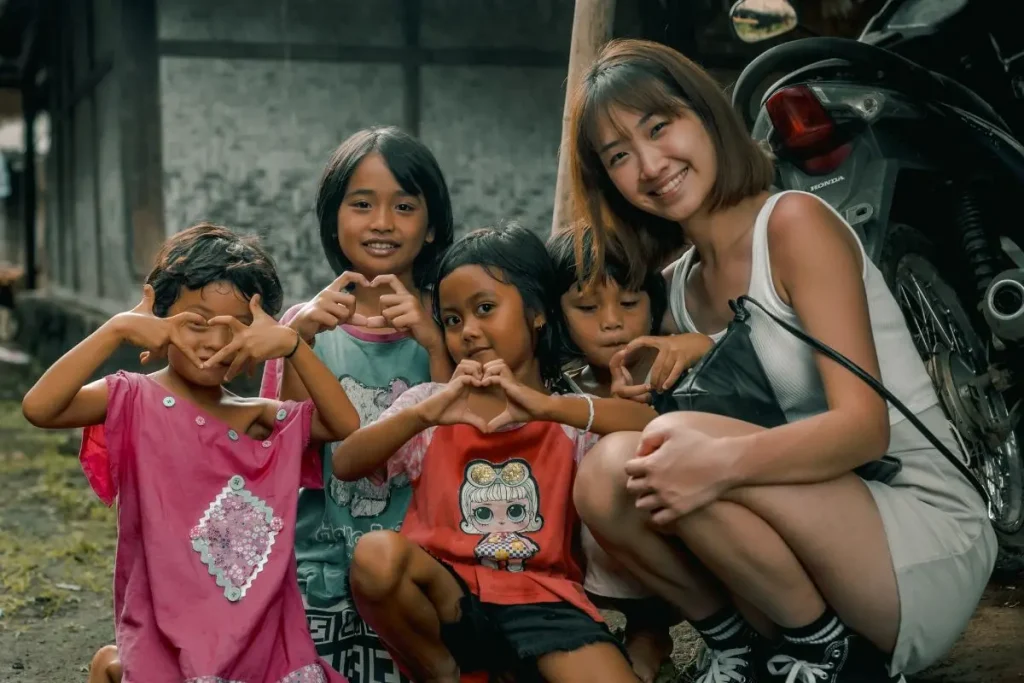
Lombok is different. The Sembalun valley and the villages surrounding Rinjani National Park remain genuinely rural Sasak communities. Students encounter local life, local food, and local culture in a context that has not been packaged for mass tourism consumption. That is an educational asset.
Rinjani Dawn Adventures is not a third-party partner. Venture Beyond Expeditions founder Angus Lawrence co-founded Rinjani Dawn Adventures on Lombok over twelve years ago. He built the safety systems, wrote the risk assessments and standard operating procedures, and served as the primary operational contact for school groups from two leading Singapore international schools that used the operation for student expeditions.
Day-to-day operations on the ground are led by co-founder and director Saefudin Zohri, a Lombok local with over twelve years of operational and logistics experience running expeditions on Rinjani. All guides are drawn from the villages surrounding the national park. The economic benefit of every expedition stays in the community.
When a school books with Venture Beyond Expeditions, they are not hiring a middleman who subcontracts to a local operator. They are working directly with the people who built the operation from the ground up.
For schools with safeguarding policies around student interaction with local communities, this structure matters. Students are working with a known, accountable local operation, not passing through a generic tourism supply chain.
The Operator Question
The single most important factor in any school expedition is not the destination. It is who is running it.
Nepal has many expedition operators, ranging from highly professional to dangerously inadequate. So does every other destination. The brand names that market school programs in Nepal are often intermediary operators who subcontract the actual ground operation to local companies they may or may not know well.
Venture Beyond Expeditions was founded by Angus Lawrence, who is also a co-founder and director of Rinjani Dawn Adventures. He wrote the risk assessments and standard operating procedures used on every Rinjani expedition. He was the primary operational contact for school groups from two leading Singapore international schools that previously used Rinjani Dawn Adventures for student expeditions.
There is no subcontracting. There is no booking agent taking a margin. When your school enquires about a Lombok expedition, you are speaking directly to the person who built the operation.
That is an unusual claim in the school expedition industry. Most providers cannot honestly make it.
Which Destination Is Right for Your School?
Nepal is a legitimate choice for schools with experienced student groups, longer available trip windows, higher per-student budgets, and specific curriculum or personal development goals that require the Himalayan context.
Lombok is the stronger choice for schools that want a serious, genuine expedition experience at a destination that is closer, more accessible, more cost-effective, and run by an operator with deep, direct knowledge of the ground.
For schools in Singapore or Australia running their first overseas expedition, or looking to build a multi-year program with a consistent destination partner, Lombok offers something Nepal cannot: a tiered program structure, a shorter travel footprint, and a local operation that has been running school groups for over a decade.
If you are evaluating expedition destinations for your school, the question is not which one sounds more impressive. The question is which one serves your students best, within your school’s risk framework, budget, and educational goals.
Frequently Asked Questions
Is Mount Rinjani suitable for school groups? Yes, with appropriate program selection. Venture Beyond Expeditions offers three program tiers designed specifically for student groups aged 15 and above. The Sembalun Highland Trek suits less experienced groups. The Crater Rim is the standard school program. The Full Summit is available for experienced, well-prepared students. Program selection is based on year group, fitness levels, and your school’s expedition history.
What age do students need to be for a Rinjani expedition? Venture Beyond Expeditions runs programs for students aged 15 and above. This reflects both the physical demands of trekking at altitude and the maturity required for a multi-day wilderness expedition. All programs are designed for secondary school students in Years 10 through 12.
How does Nepal compare to Lombok for school expedition altitude? Nepal’s most popular school routes reach between 4,000 and 5,400 metres, introducing significant high-altitude acclimatisation requirements. Mount Rinjani’s summit sits at 3,726 metres, and the standard school program targets the Crater Rim at 2,641 metres. Rinjani offers a serious altitude experience without the medical risk profile of Nepal’s higher routes.
How long is the flight from Singapore to Lombok? Direct and one-stop flights from Singapore to Lombok take approximately two hours. This compares with five to six hours minimum for flights from Singapore to Kathmandu. Shorter travel time reduces transit risk, student fatigue, and emergency repatriation time.
What is the cost of a school expedition to Lombok compared to Nepal? A Lombok expedition with Venture Beyond Expeditions is significantly less expensive than a comparable Nepal program. Shorter flights, simpler logistics, and a direct operation with no intermediary costs all contribute to the difference. Pricing is available on application and is quoted per trip based on group size and program selection.
Who operates school expeditions to Rinjani through Venture Beyond Expeditions? Venture Beyond Expeditions is founded and directed by Angus Lawrence, an Australian who co-founded Rinjani Dawn Adventures on Lombok. Angus wrote the risk assessments and standard operating procedures used on all Rinjani expeditions and served as the primary operational contact for school groups from two leading Singapore international schools. All ground operations are led by Saefudin Zohri, co-owner of Rinjani Dawn Adventures, with over twelve years of operational and logistics experience running expeditions on Lombok.
Can the expedition program be tailored to our school’s curriculum? Yes. All Venture Beyond Expeditions programs can be structured around your school’s outdoor education framework, including curriculum links, student development outcomes, and service-learning components. Program design begins with a consultation call to understand your school’s specific goals, year group, and student profile.
What happens if conditions make the planned program unsafe? Venture Beyond Expeditions operates a safety guarantee: if at any point the safety assessment determines that conditions are unsuitable for your group, the program will be modified or cancelled at no penalty to your school. Student safety is never traded against a booking commitment.