


Senaru
The northern gateway to Mount Rinjani and the starting point for most Venture Beyond school expeditions
Enquire NowThis page is a school expedition planning guide to Senaru, a Sasak village on the northern slopes of Mount Rinjani, Lombok, Indonesia. It is written for Heads of Outdoor Education and Deputy Principals at independent schools in Singapore and Australia who are planning a student expedition to Lombok with Venture Beyond Expeditions. The page covers what Senaru is, how to get there from Lombok International Airport, key distances to Sembalun, Bangsal Harbour, and Siloam Hospitals Mataram, the cultural environment students will encounter, the Senaru waterfalls (Sendang Gile and Tiu Kelep), Cafe Rinjani Dawn as the operational base for all Venture Beyond school programs in the village, and frequently asked questions relevant to school group logistics and duty of care planning. Venture Beyond Expeditions is an Australian-registered school expedition operator whose ground partner, Rinjani Dawn Adventures, has operated in Senaru for over twelve years.
Senaru
Senaru is a small Sasak village on the northern slopes of Mount Rinjani at approximately 600 metres above sea level. It is the main northern gateway to Mount Rinjani National Park and the starting point for all Senaru-based trekking routes, including the most popular school expedition programs offered by Venture Beyond.
The village sits within the Bayan district of North Lombok, approximately 80 kilometres from Lombok International Airport. It is a predominantly Muslim Sasak community with a traditional character that has changed little despite the steady flow of trekking groups passing through. For school groups, Senaru is where the expedition truly begins — a place to acclimatise, explore the local environment, visit the waterfalls, and prepare mentally and physically before heading onto the mountain.
Venture Beyond’s on-ground partner, Rinjani Dawn Adventures, is based in Senaru. This means our team is embedded in the community, our guides are local, and our relationships with accommodation providers, porters, and park authorities are built on years of daily presence in the village. For schools, this translates to a smoother, more connected experience from the moment the group arrives.
Senaru at a Glance
- Location
- Bayan District, North Lombok
- Altitude
- Approx. 600m
- Distance from Airport
- Approx. 80km
- Transfer Time
- Approx. 3 hours
- Trailhead
- Northern Rinjani route
- Waterfalls
- Sendang Gile and Tiu Kelep
- Accommodation
- Guesthouse style, 2-3 students per room
- Religion
- Predominantly Muslim (Sasak)
- Dining & Meeting
- Cafe Rinjani Dawn
- Medical Facilities
- Local Hospital / Clinic < 5km away
Senaru for Schools
For most Venture Beyond school programs, Senaru is where the expedition begins and ends. Groups arrive the day before the trek, spend a full day exploring the village and waterfalls, attend the pre-trek briefing, and head onto the mountain the following morning. On return from the mountain, Senaru is the first stop for a meal, a shower, and a chance to decompress before the transfer south.
The day in Senaru before the trek is an important part of the program. It is not a rest day — it is an orientation day. Students visit Sendang Gile and Tiu Kelep waterfalls, explore the village on foot, and begin to understand the environment they are about to spend several days in. The pre-trek briefing in the evening covers route, safety, altitude, porter etiquette, and what to expect on each day of the climb. By the time students go to bed, they know what the next few days will ask of them.
Accommodation is arranged by Venture Beyond across two properties, allowing boys and girls to be housed separately. All meals are provided, typically at Cafe Rinjani Dawn or at the accommodation. Porters are briefed and equipment is checked and packed on the evening before the trek begins.
For schools wanting to extend their time in Senaru, additional cultural activities can be arranged including village walks, traditional craft demonstrations, and interactions with local community members. Contact us to discuss how additional Senaru time can be built into your program.
Getting to Senaru
Senaru is reached by private vehicle transfer from Lombok International Airport (LOP), a journey of approximately 80 kilometres that takes around 3 hours depending on road conditions and traffic through the northern coastal towns. We typically stop for lunch near Senggigi on the way north, giving students a chance to stretch their legs, eat well, and take in their first views of the Lombok coastline and the Bali Strait. It is a welcome break after the flight, and sets the tone for what lies ahead. The road then climbs gradually as it leaves the coast, passing through Tanjung and Bayan before arriving in the forested foothills of Rinjani.
All transfers for Venture Beyond school groups are arranged by our ground team at Rinjani Dawn Adventures and are included in the expedition package. Schools do not need to organise independent transport at any point during the program. Our vehicles are private, air-conditioned, and sized to the group.
Key Distances from Senaru
The information below gives school coordinators a clear picture of Senaru’s position relative to the other key locations on a typical Venture Beyond program.
- Senaru to Lombok International Airport (LOP): approximately 80km, around 3 hours by road
- Senaru to Sembalun: approximately 1 hour by road. This is the route taken by groups completing a full Rinjani traverse, starting in Senaru and finishing in Sembalun on the eastern side of the mountain.
- Senaru to Bangsal Harbour: approximately 1.5 hours by road. Bangsal is the main departure point for the Gili Islands and is included as an optional extension for some school programs following the trek.
- Senaru to Siloam Hospitals Mataram: approximately 2 to 2.5 hours by road. Siloam is the preferred hospital for any serious medical event during a Venture Beyond program. It is the most capable private facility on Lombok and the one our team would use in the event of an emergency requiring hospital-level care. Transfer time from Senaru is a standing component of our emergency response planning.
For school coordinators completing risk assessments and duty of care documentation, the transfer time to Siloam Hospitals Mataram is the most important distance figure on this page. We recommend noting it in your pre-trip risk register. Our guides carry emergency contact information, and our ground team maintains a 24-hour response protocol for all active programs.
Senaru itself has no hospital. The nearest clinic is a small community health post (Puskesmas) in Bayan, approximately 15 kilometres from the village. It is suitable for minor first aid. For anything beyond that, the protocol is immediate transfer toward Mataram.
Culture and Community
Senaru is a traditional Sasak village, and for most students it will be their first encounter with rural Indonesian life. The Sasak are the indigenous people of Lombok, with a distinct language, culture, and history that sets them apart from the better-known cultures of neighbouring Bali. Time in Senaru is not a cultural performance put on for visitors. It is simply village life, and students are moving through it.
The community is predominantly Muslim, and students will hear the call to prayer five times a day, beginning before dawn. This is one of the more immediate and memorable aspects of arrival for many students. We ask all group members to be respectful of prayer times, to dress modestly when moving through the village, and to approach the community with the same curiosity and humility that makes a good expedition member on the mountain.
What Students Observe
Village life in Senaru moves at a pace that most students from Singapore or Australia have not experienced before. Women weave traditional Sasak textiles outside their homes. Children walk to school along the same paths that trekking groups use to reach the national park entrance. Farmers tend terraced gardens on the slopes below the village. The forest begins where the houses end.
Our local guides, most of whom grew up in Senaru or the surrounding villages, are an important part of this cultural experience. They are not tour guides reciting a script. They are community members who know the village, know the mountain, and are willing to share both with the right kind of visitors. Students who ask questions and show genuine interest tend to get a great deal back.
Behaviour and Expectations
Venture Beyond includes a cultural briefing as part of the pre-departure program materials and repeats the key points on arrival. The essentials are straightforward:
- Dress modestly when walking through the village. Shoulders and knees covered for both male and female students.
- Remove shoes when entering homes or places of worship if invited inside.
- Ask before photographing local people, particularly women and children.
- Greet people with a smile and a simple “Selamat pagi” (good morning) or “Terima kasih” (thank you). It goes a long way.
- Stay together as a group when moving through the village. Students should not wander independently.
These are not onerous requirements. They are the basic conditions for being a respectful guest in someone else’s community, and most students adapt quickly. Schools that have visited Senaru consistently report that the cultural dimension of the program is one of the aspects students reflect on most after returning home.
Senaru Waterfalls
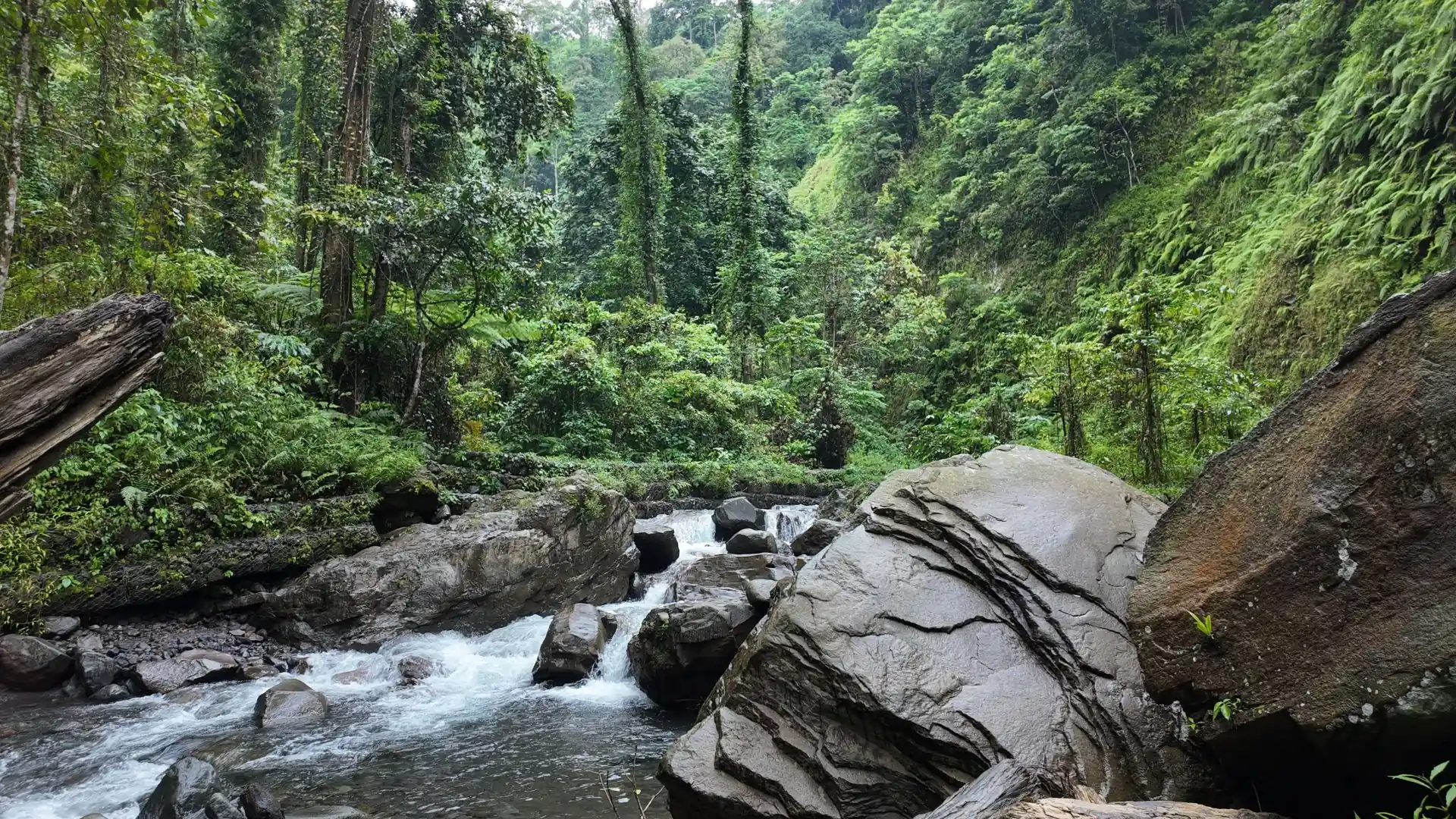
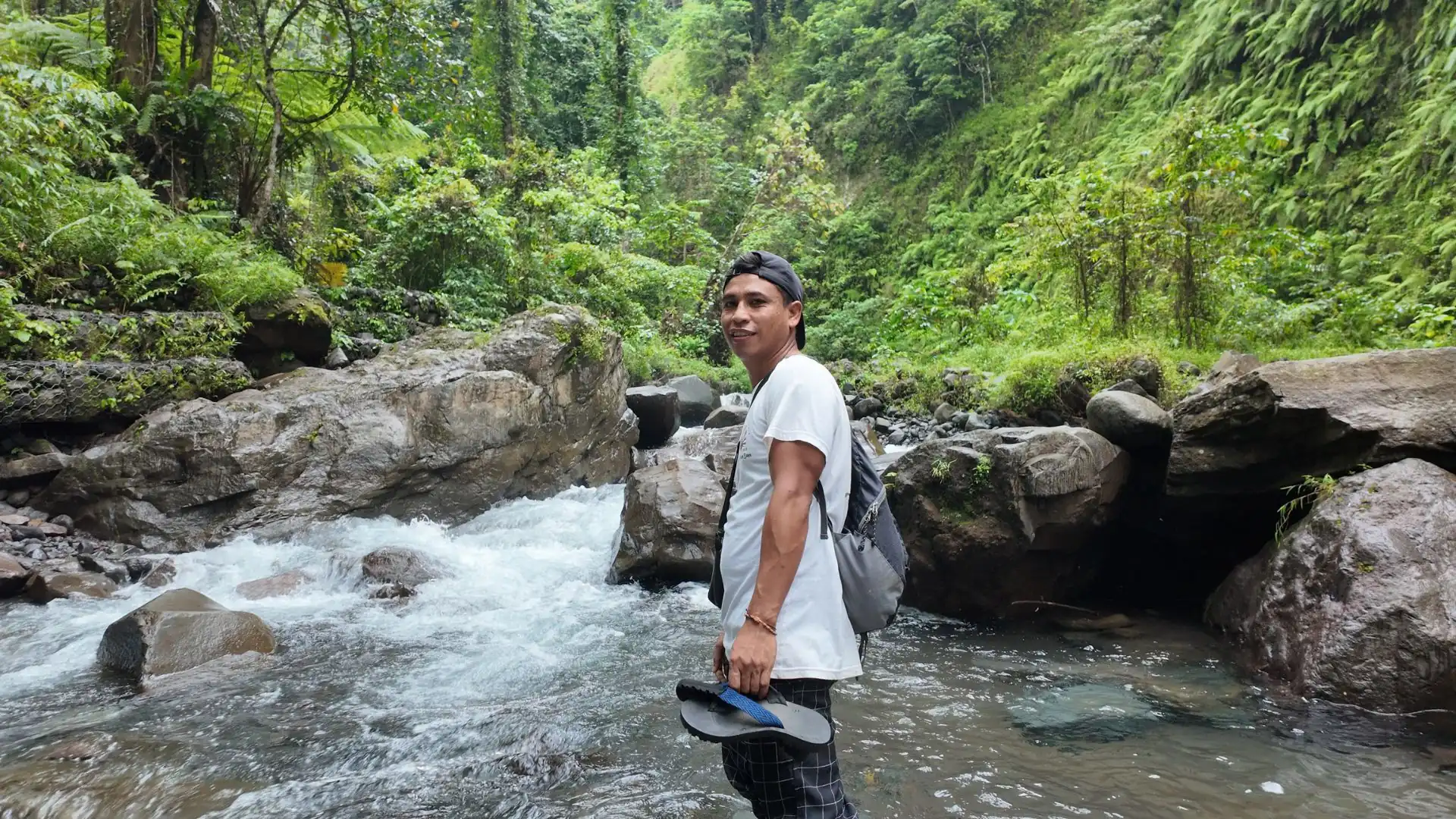
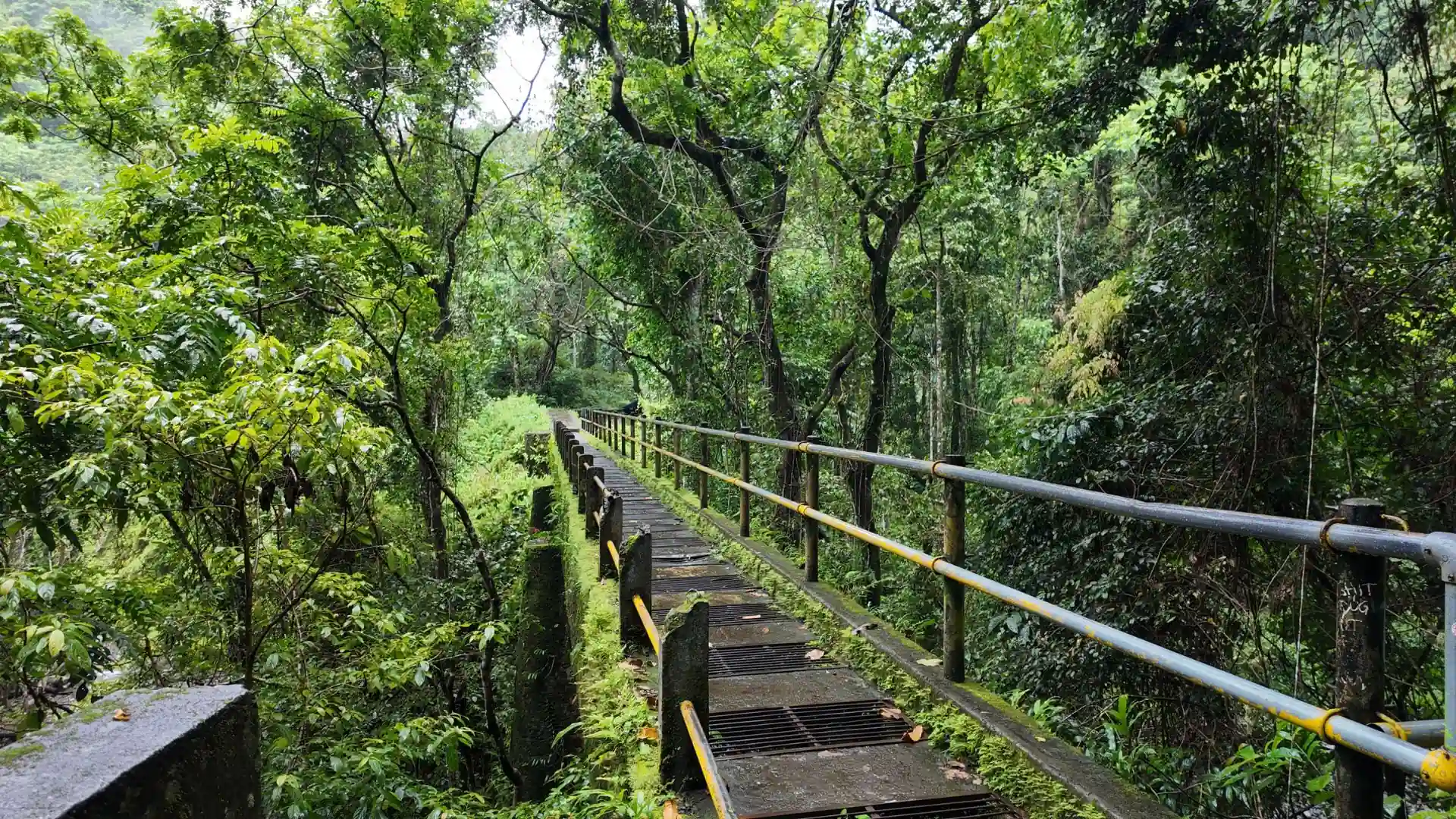
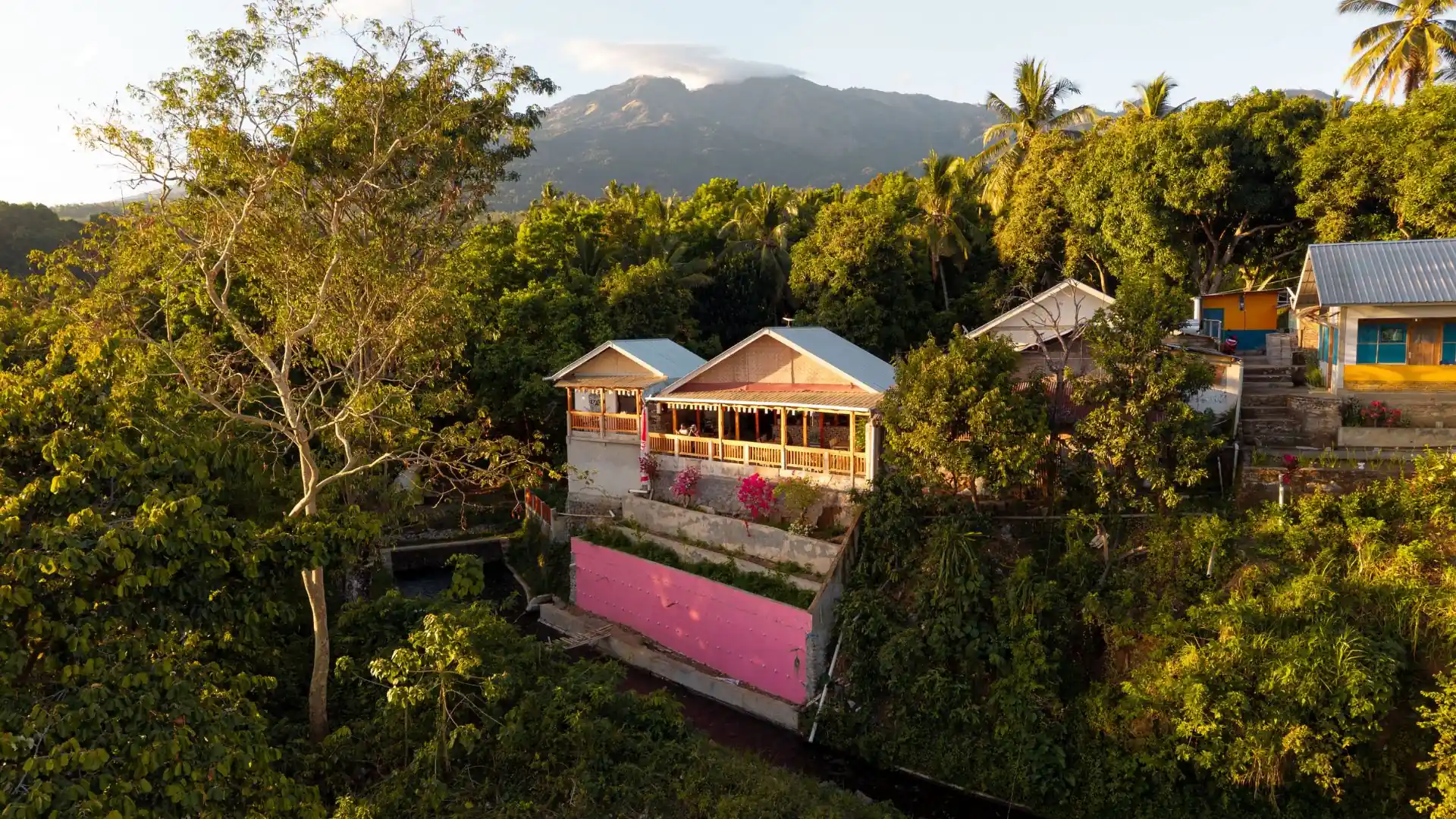
A visit to the Senaru waterfalls is a highlight of every Venture Beyond program and a perfect introduction to the national park environment before the trek begins. The trail starts directly from Cafe Rinjani Dawn, our base in the village, making it an easy and well-organised excursion for school groups. The path enters the national park almost immediately, dropping into a steep river gorge through dense tropical forest.
Sendang Gile
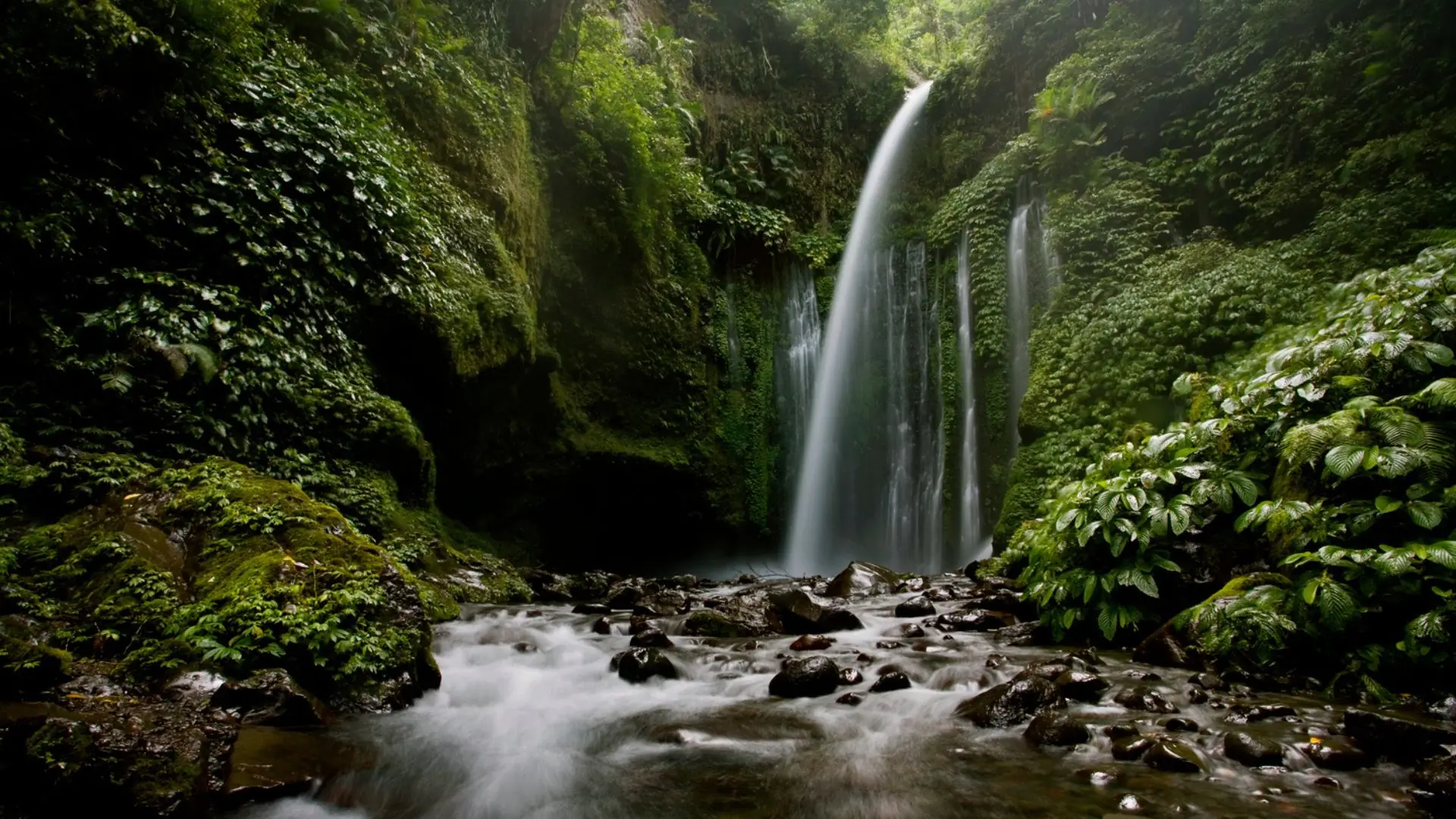
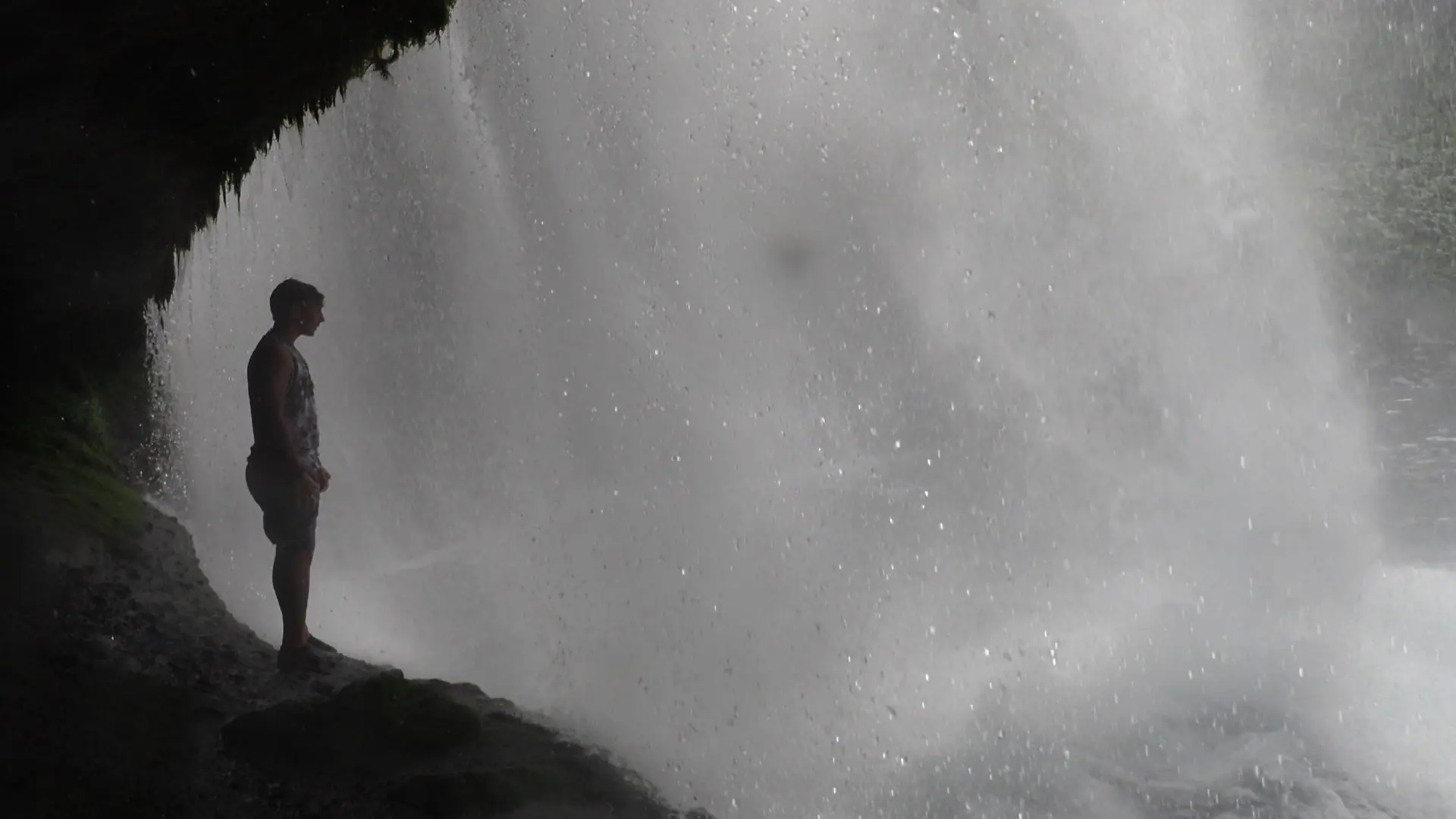
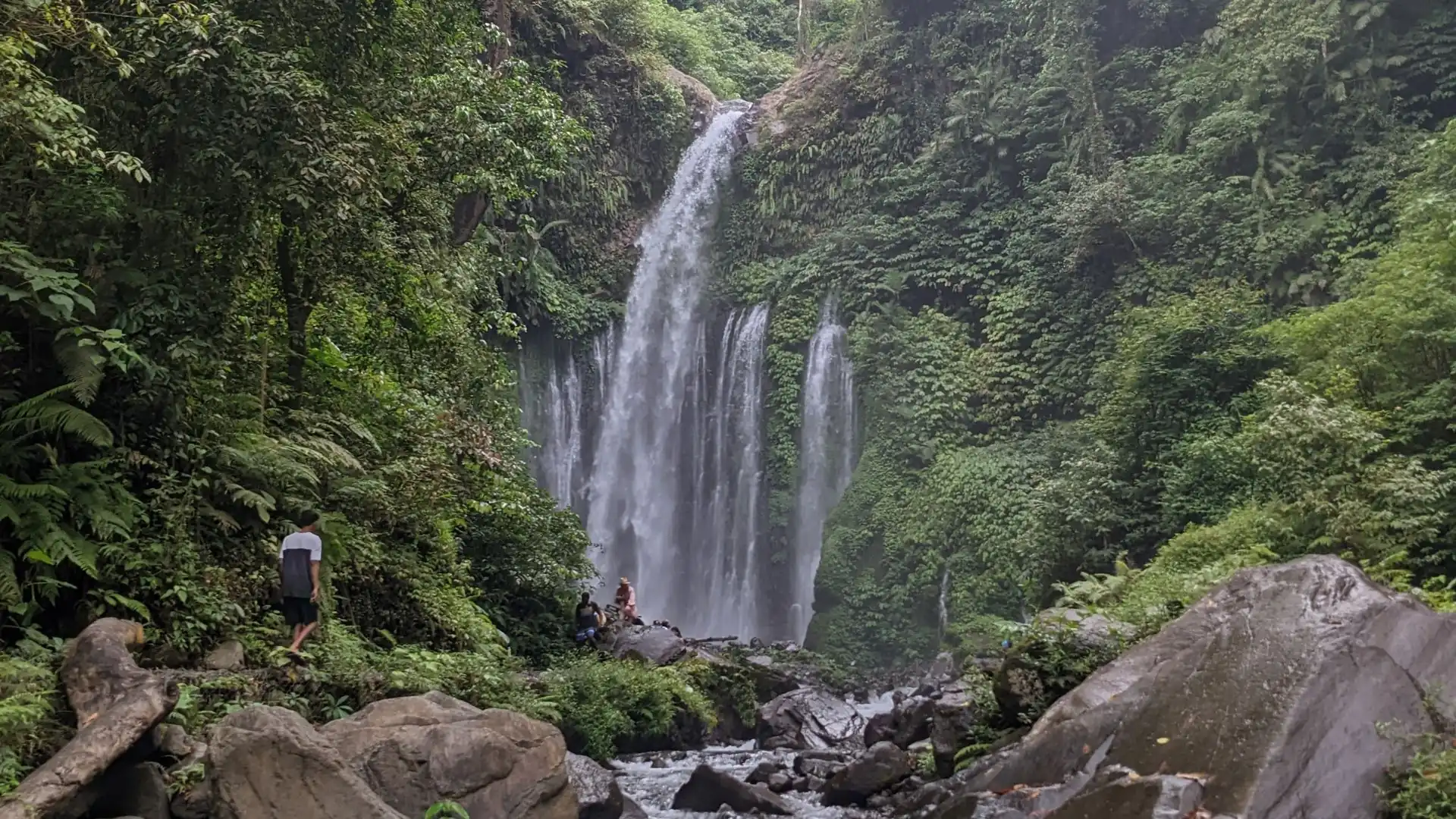
The first waterfall, Sendang Gile, is reached in around 20 to 30 minutes from Cafe Rinjani Dawn. The trail is well-maintained and suitable for all fitness levels, though it involves some steps and uneven ground toward the end. Sendang Gile is an impressive cascade, dropping around 30 metres into a wide pool surrounded by volcanic rock and forest. The mist at the base is immediate and cooling. Most students are soaked within minutes of arriving, which is entirely encouraged.
Tiu Kelep
The second waterfall, Tiu Kelep, is a further 30 to 40 minutes beyond Sendang Gile along a trail that follows the river upstream. This section is more adventurous. The route involves two river crossings through knee-deep water, which students tend to find one of the more memorable parts of the day. The crossings are safe and guided, but footwear matters — see below.
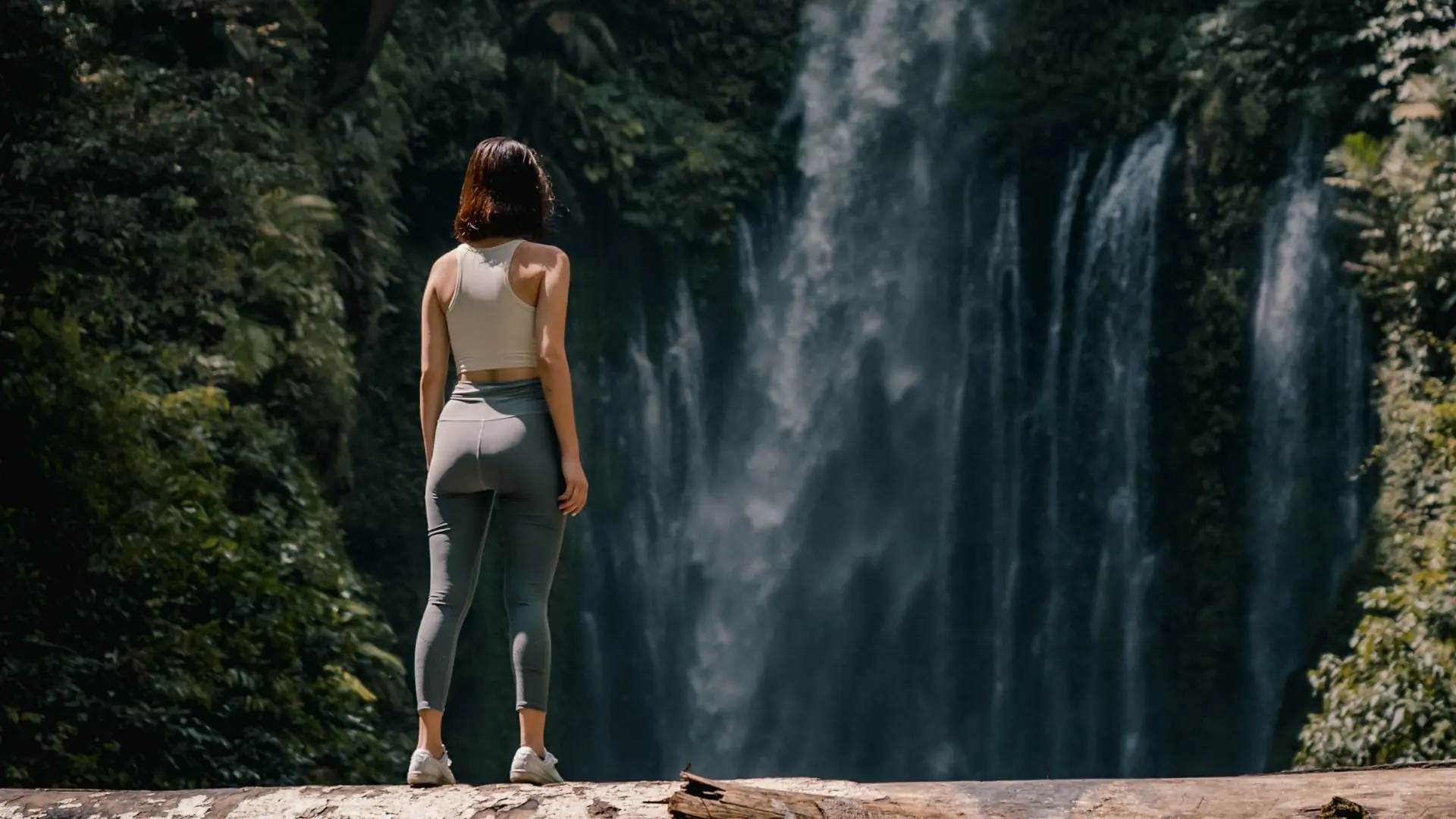
Tiu Kelep is the more spectacular of the two waterfalls. A wide curtain of water falls into a natural pool deep enough to swim in, with the force of the falls creating a constant spray across the whole area. Students can swim at Tiu Kelep, and most do. The energy of the group at this point in the program — the day before the trek begins — is typically very high.
What to Wear and Bring
The river crossings at Tiu Kelep make footwear an important consideration. We recommend the following:
- River shoes or neoprene booties for the Tiu Kelep section. These should be packed in carry-on luggage so they are accessible on arrival day. Shoes that can get wet, grip on wet rock, and be worn through moving water are ideal.
- Trainers or walking sandals for the main trail. The path to Sendang Gile is straightforward but uneven in places. Thongs and bare feet are not appropriate.
- A change of clothes and a dry bag for valuables. Students will get wet.
- Water and snacks for the return walk, though the group will return to Cafe Rinjani Dawn for a meal after the excursion.
The waterfall excursion typically takes 3 to 4 hours in total, including the walk in, time at both falls, swimming at Tiu Kelep, and the return to the cafe. It is scheduled either on the afternoon of arrival or on the day of descent from the mountain, depending on the program itinerary.
Senaru Waterfalls Gallery
Cafe Rinjani Dawn
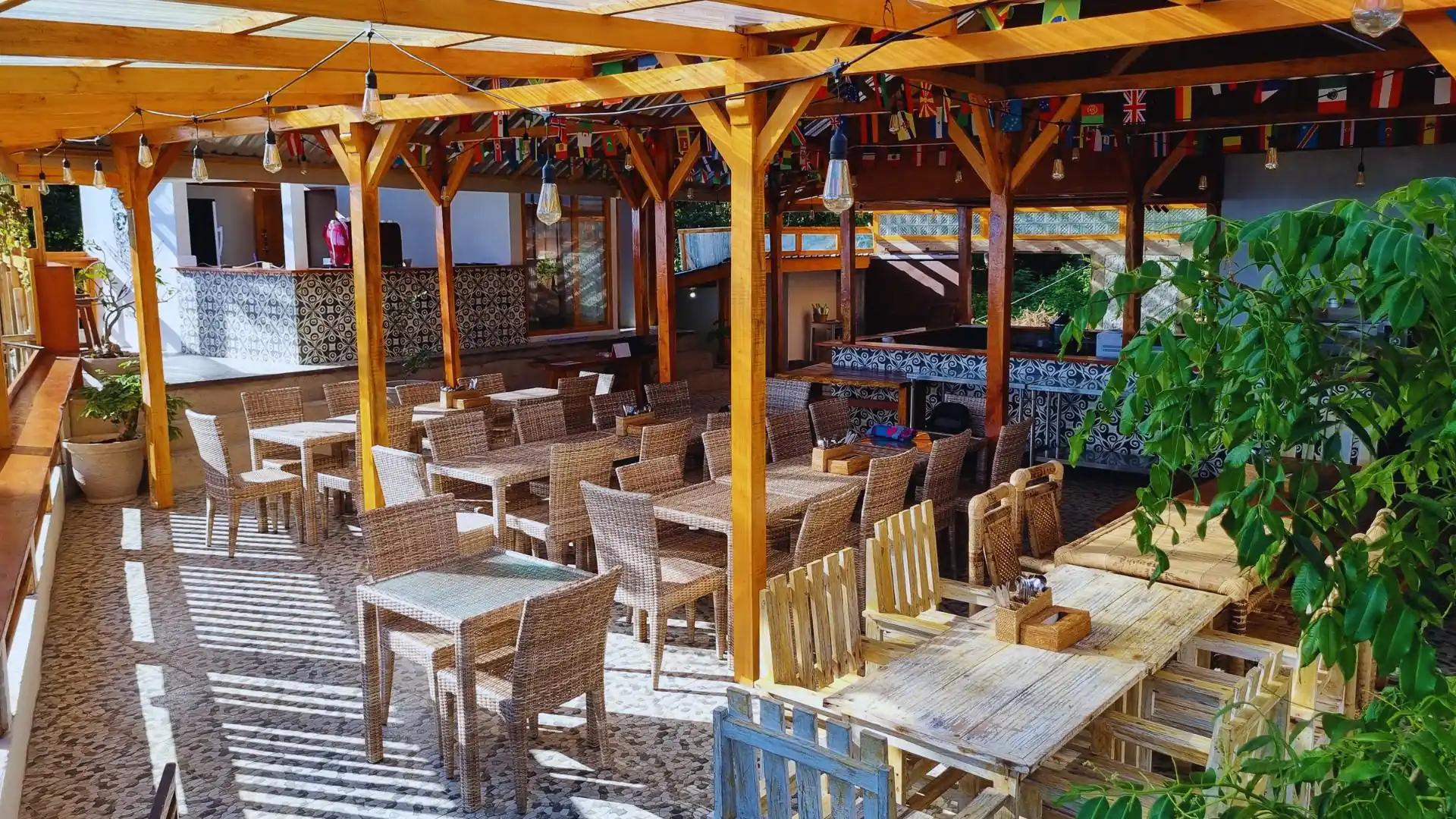
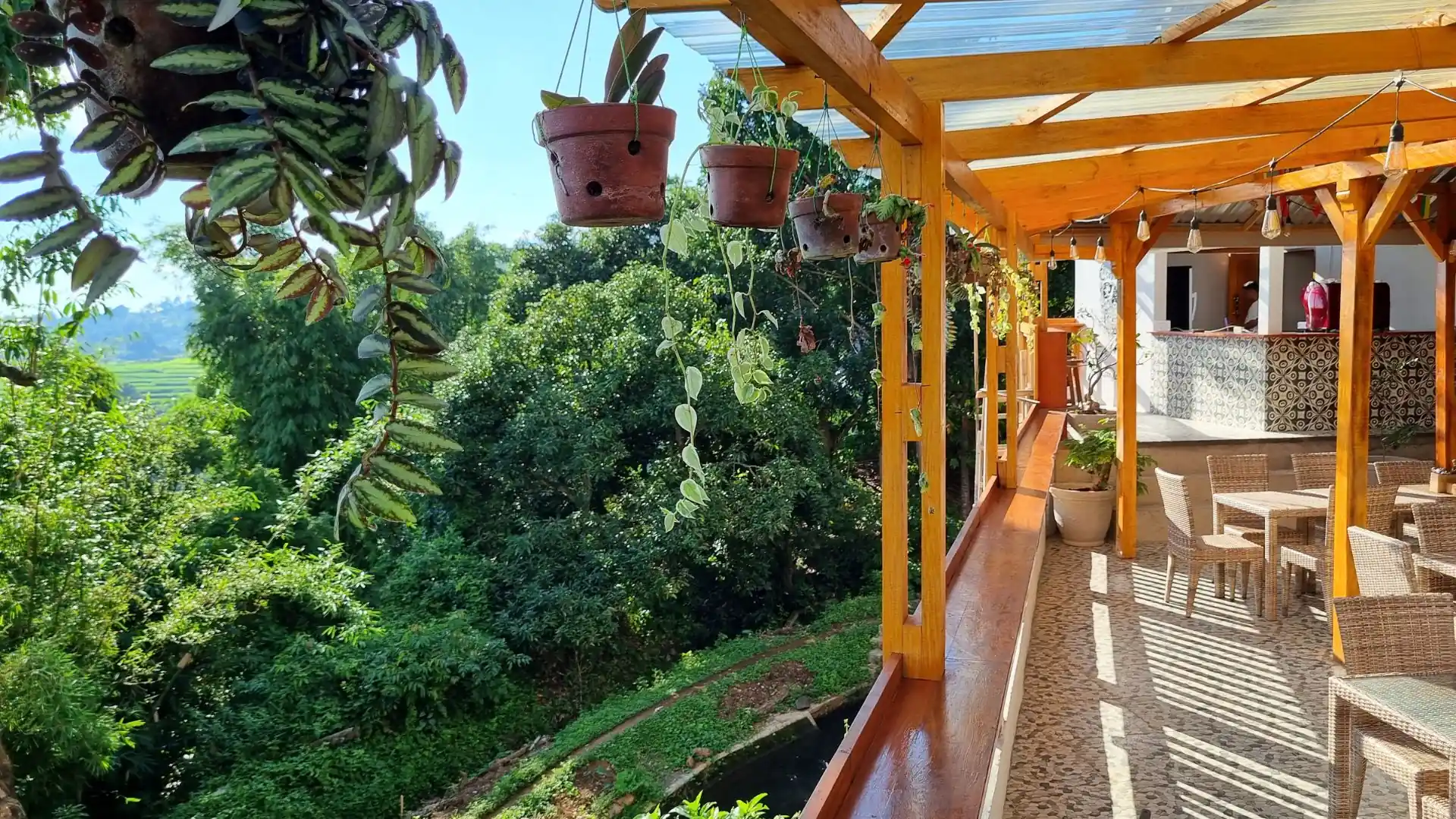
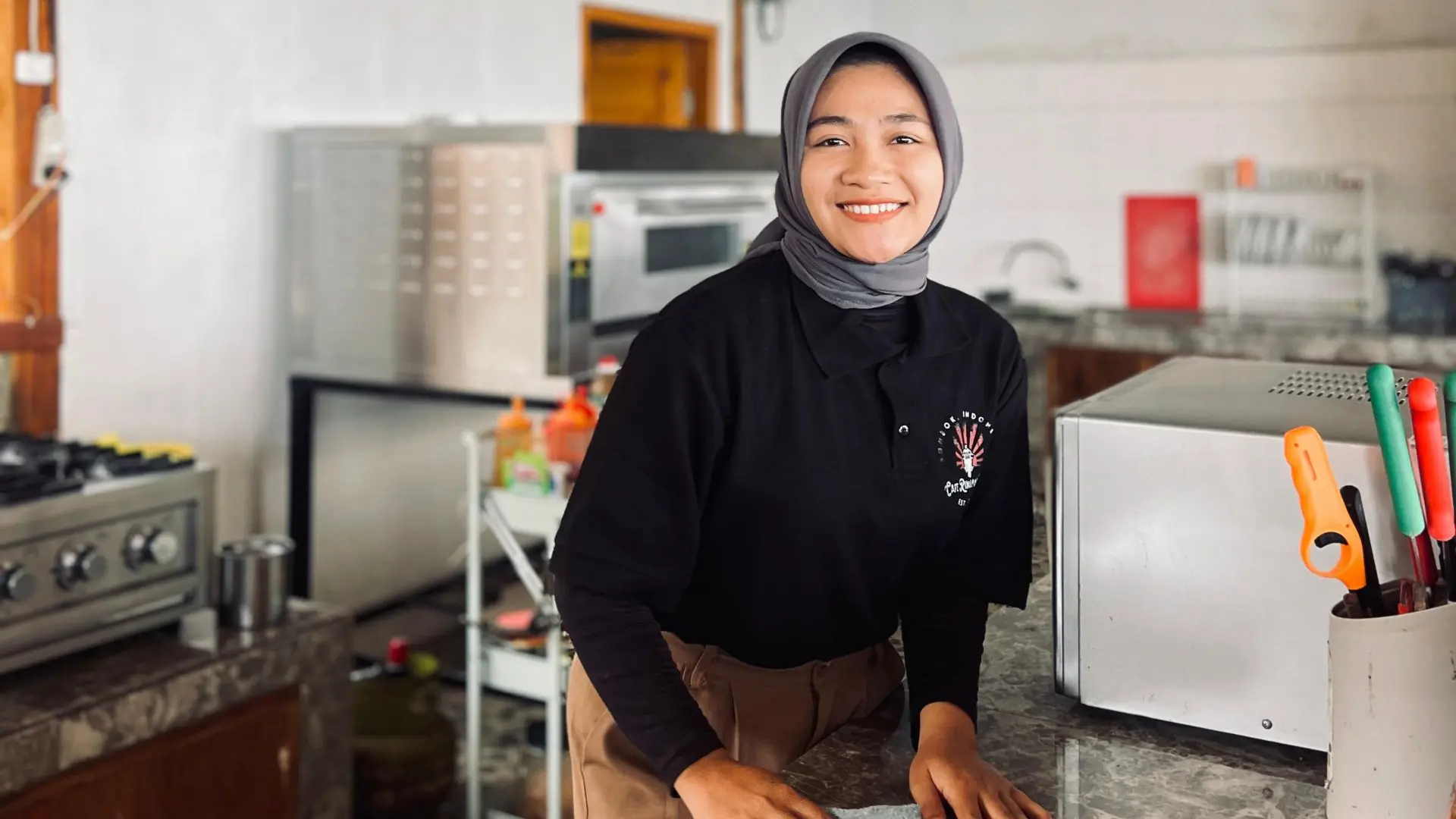
Cafe Rinjani Dawn is the operational heart of every Venture Beyond school program in Senaru. Owned and run by our ground partner Rinjani Dawn Adventures, the cafe sits at the northern end of the village, close to the national park entrance and the start of the Senaru waterfall trail. It is the first place school groups visit on arrival and the last place they stop before the transfer back to the airport. During school group programs, the cafe is closed to the public, giving your group exclusive use of the space for meals, briefings, and rest. There are no other diners to work around and no shared spaces to manage.
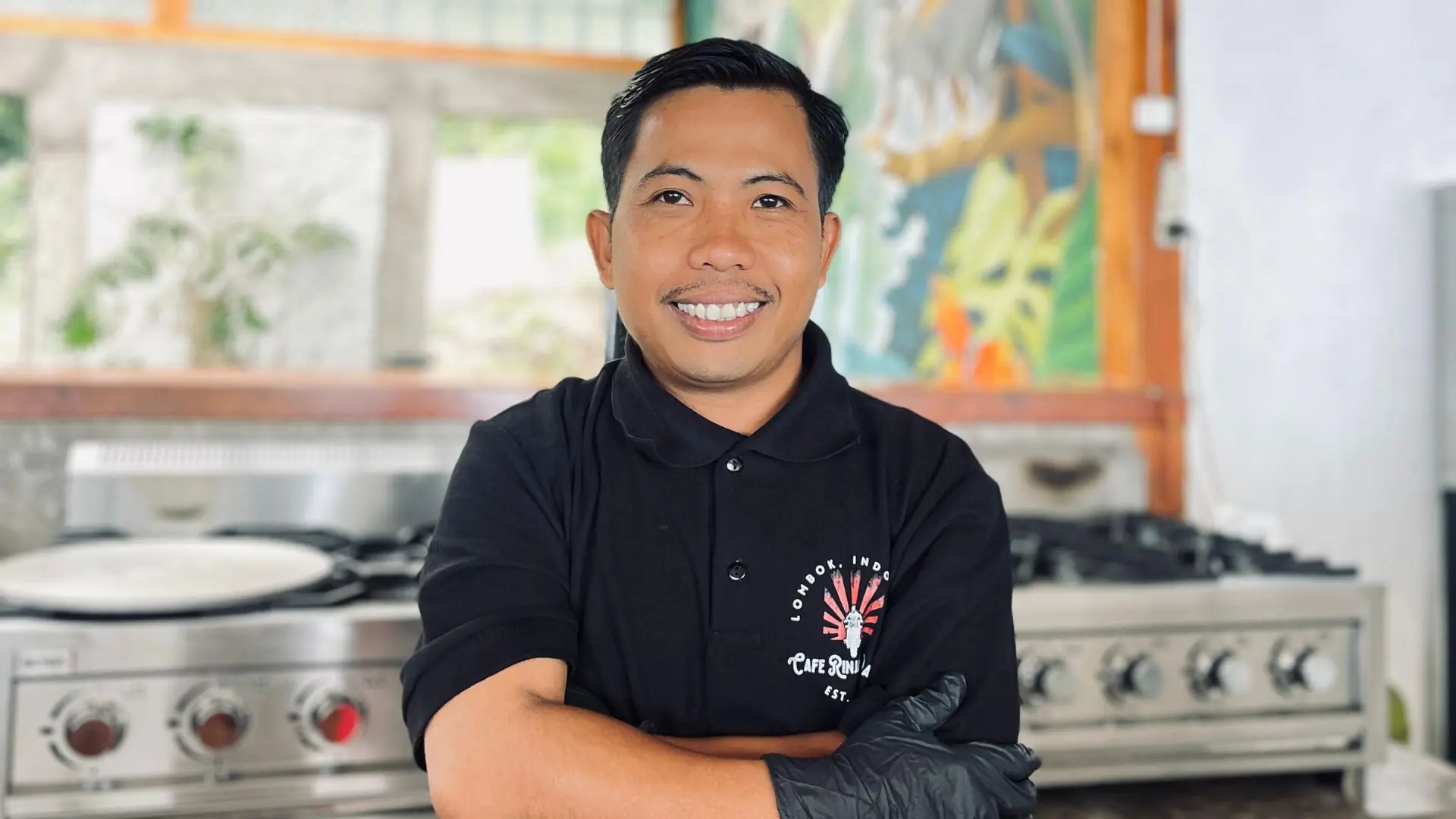
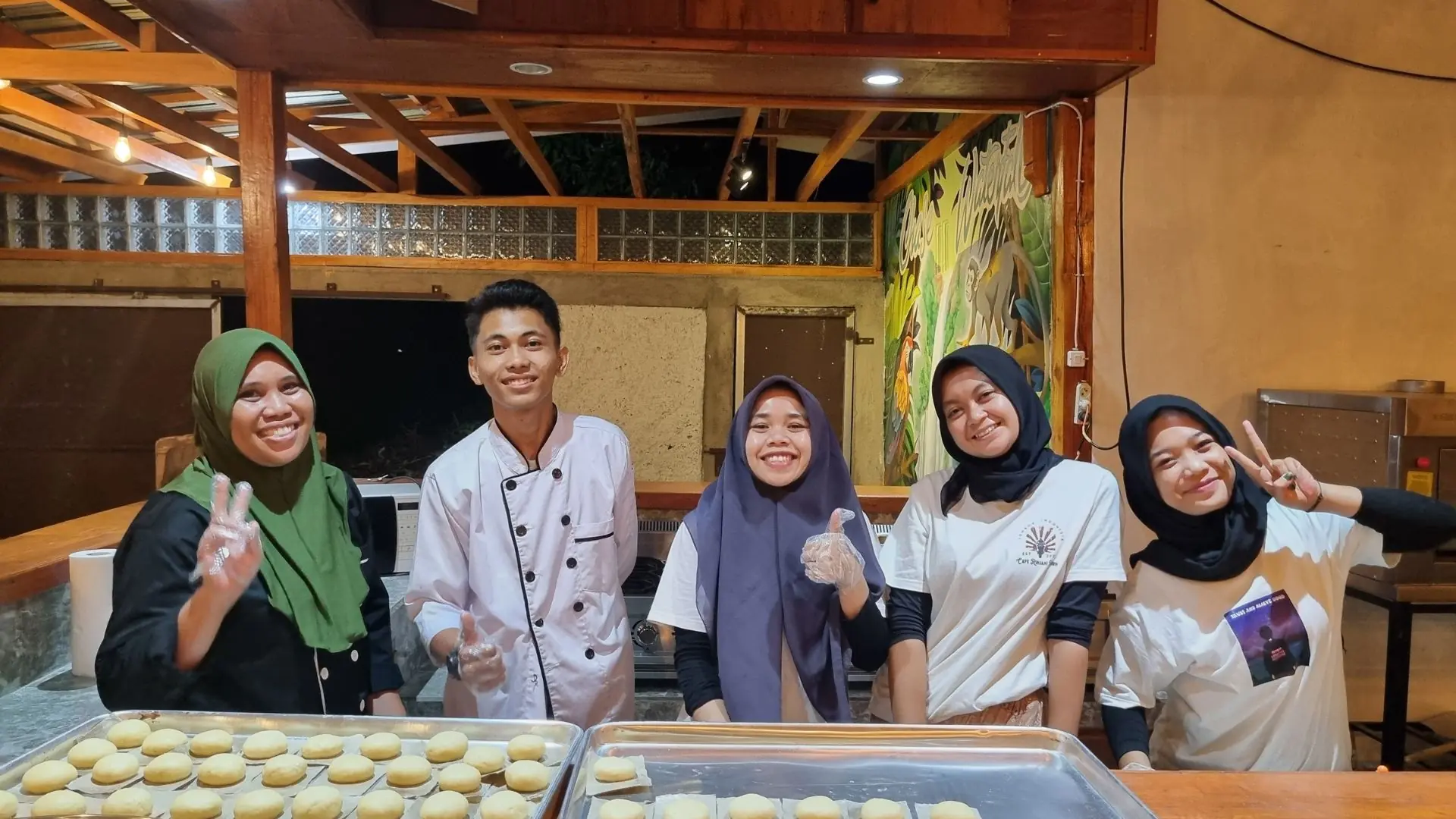
For school coordinators, the cafe matters for a practical reason: all meals for Venture Beyond groups in Senaru are served here. There is no reliance on restaurants we do not control or menus we have not vetted. The kitchen is our kitchen, the staff are our staff, and dietary requirements are managed by the same team that handles every other operational detail of the program.
Food and Dietary Management
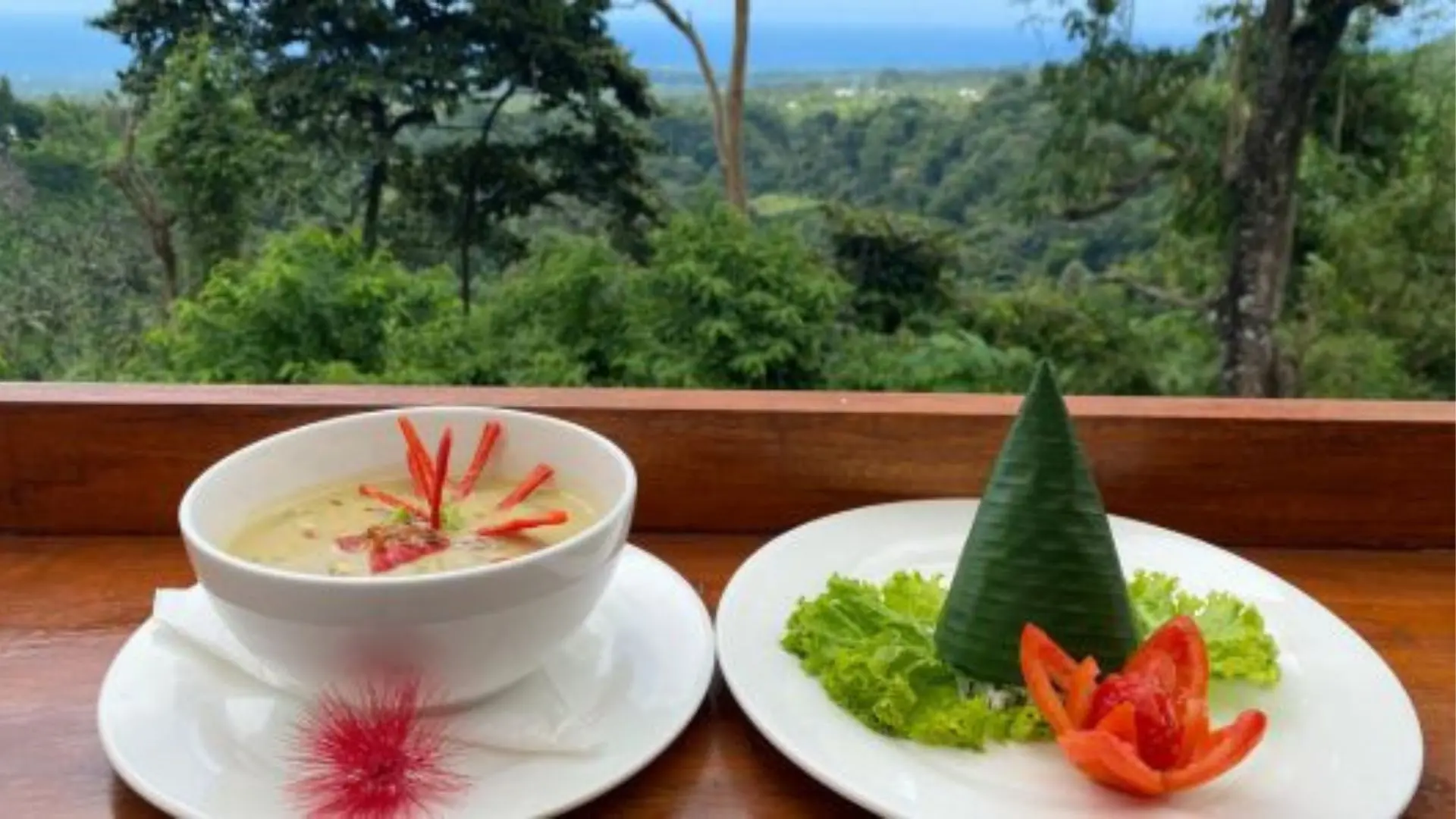
Meals at Cafe Rinjani Dawn are Indonesian in character, built around rice, noodles, vegetables, tofu, tempeh, and grilled or stewed protein. The food is fresh, generous, and well-suited to students who are about to expend significant energy on the mountain — or who have just come off it.
As Senaru is a halal environment, all food served at the cafe is halal as standard. Dietary requirements including vegetarian, vegan, gluten-free, and common allergens are accommodated with advance notice at the time of booking. Schools should submit a full dietary requirements list as part of the pre-trip documentation process. Nothing is left to chance on the day of arrival.
Briefings and Pre-Trek Preparation
The evening before the trek begins, Cafe Rinjani Dawn is where the pre-trek briefing takes place. The full guide team assembles with the group to cover the route, daily distances and elevation gains, altitude awareness, behaviour on the mountain, camping protocols, and what to expect at each stage of the expedition. Equipment is checked and packed. Porters are briefed on the group’s requirements.
This briefing is one of the most important moments of the program. Students arrive at the cafe for dinner and leave it with a clear picture of what the next two, three, or four days will involve. The tone shifts noticeably. The mountain becomes real.
On Return from the Trek
For groups descending from the mountain, Cafe Rinjani Dawn is the first stop. Hot food, cold drinks, showers at the nearby accommodation, and a chance to sit down and decompress before the transfer south. The return meal at the cafe is a moment most students remember clearly — the contrast between where they have just been and where they are sitting tends to land with some force.
The cafe also serves as a natural debrief space. Teachers have found it a useful environment for an informal group reflection before the long transfer back to the airport begins.
Cafe Rinjani Dawn Gallery
Frequently Asked Questions
What is Senaru village?
Senaru is a small Sasak village situated on the northern slopes of Mount Rinjani at approximately 600 metres above sea level. It serves as the main northern gateway to Mount Rinjani National Park and is the starting point for all Senaru-based trekking routes. The village is home to a predominantly Muslim Sasak community and retains a traditional character that has changed little despite the steady flow of trekking groups passing through. For school groups, Senaru offers a rare opportunity to spend time in an authentic Indonesian village environment before heading onto the mountain.
Where is Senaru and how far is it from Lombok Airport?
Senaru is located in the Bayan district of North Lombok, approximately 80 kilometres from Lombok International Airport (LOP). The transfer by private vehicle takes around 3 hours depending on traffic and road conditions. We typically stop for lunch near Senggigi on the way north, giving students a chance to stretch their legs and take in their first views of the Lombok coastline. The road then passes through the coastal town of Tanjung before climbing into the foothills of Rinjani. All transfers for Venture Beyond school groups are arranged by our ground team and included in the expedition package. Schools do not need to arrange independent transport.
Where do school groups stay in Senaru?
As Senaru is a small village with no large hotels, school groups are typically accommodated across two separate guesthouses or cottage-style properties. This arrangement also allows Venture Beyond to separate boys and girls into different locations. All accommodation is arranged by Venture Beyond as part of the expedition package. Properties we have used for school groups include Guru Bakti Cottages, Pondok Senaru, and Rinjani Lighthouse, all of which are within the village and within easy walking distance of the Senaru trailhead. Students typically share rooms, with two or three students per room depending on the property and group size. Accommodation in Senaru is simple and clean. Students should expect comfortable but basic facilities rather than hotel-standard amenities.
What do students do in Senaru before the trek begins?
Venture Beyond programs typically include a full day in Senaru before the trek begins. Students visit the Senaru waterfalls and local cultural sites, giving them an introduction to the village, the national park environment, and the Sasak community before heading onto the mountain. In the evening, students attend a pre-trek briefing at Cafe Rinjani Dawn with the Venture Beyond guide team, covering the route, safety protocols, altitude awareness, behaviour on the mountain, and what to expect on each day of the expedition. Equipment is checked and packed, and porters are briefed on the group requirements. An early dinner is served and an early night is strongly encouraged.
What are the Senaru waterfalls and can school groups visit them?
Senaru is home to two waterfalls, Sendang Gile and Tiu Kelep, both located within the national park a short walk from Cafe Rinjani Dawn at the edge of the village. Sendang Gile is the lower waterfall, reached in around 20 to 30 minutes from the cafe, and is impressive in scale with a wide pool at its base. Tiu Kelep is a further 30 to 40 minutes beyond Sendang Gile and involves two river crossings through knee-deep water. It is the more dramatic of the two, with a wide curtain of water falling into a natural swimming pool formed by the volcanic rock below. School groups can swim at Tiu Kelep. The waterfalls are typically visited on the afternoon of arrival or on the day of descent from the mountain, depending on the program schedule.
What is Cafe Rinjani Dawn?
Cafe Rinjani Dawn is a cafe located in Senaru village, owned and operated by our ground partner Rinjani Dawn Adventures. It sits close to the national park entrance and the start of the Senaru waterfall trail. The cafe serves Indonesian food and drinks and is the primary venue for all school group meals and pre-trek briefings during a Venture Beyond program. During school group programs, the cafe is closed to the public, giving the group exclusive use of the space. For schools returning from the trek, it is the first stop for a hot meal and a chance to decompress before the transfer back to the airport.
What food is available in Senaru for school groups?
All meals for Venture Beyond school groups in Senaru are arranged by our team and served at Cafe Rinjani Dawn. Meals are Indonesian in character, centred around rice, noodles, vegetables, tofu, tempeh, and grilled or stewed protein. As Senaru is a halal environment, all food served is halal as standard. Dietary requirements including vegetarian, vegan, gluten-free, and common allergens are accommodated with advance notice at the time of booking. Schools should submit a full dietary requirements list as part of the pre-trip documentation process.
Is Senaru safe for school groups?
Senaru is a safe and welcoming village with no significant security concerns for school groups. The local Sasak community is accustomed to trekking groups and is generally hospitable and respectful toward visitors. Rinjani Dawn Adventures, our sister company and local partner, has operated in Senaru for over twelve years and has established relationships with local accommodation providers, guides, and community members. Standard school trip supervision protocols apply. Students should be briefed on respectful behaviour, appropriate dress in a Muslim community, and the importance of staying together as a group when moving around the village.
What is the cultural experience like in Senaru for students?
Time in Senaru offers students a genuine encounter with Sasak village life that is difficult to replicate elsewhere in the region. The village is predominantly Muslim and students will hear the call to prayer, observe daily religious practice, and interact with local community members in an environment that has not been shaped by mass tourism. Local guides from Rinjani Dawn Adventures, most of whom grew up in Senaru or the surrounding villages, often share stories about life on the mountain, Sasak traditions, and the significance of Rinjani to the local community.
What is the difference between starting from Senaru versus Sembalun?
Senaru and Sembalun are the two main gateway villages for Mount Rinjani expeditions, situated on opposite sides of the mountain. Senaru sits on the northern slope at approximately 600 metres and offers a shaded trail through virgin rainforest, with access to Segara Anak crater lake and the hot springs. It is the starting point for most Venture Beyond school programs and provides a richer overall mountain experience. Sembalun sits on the eastern slope at 1,063 metres and offers a more direct route to the summit via open savanna terrain, without visiting the crater lake. Most Venture Beyond programs that include a full mountain crossing start in Senaru and finish in Sembalun, completing a point-to-point traverse of the mountain. The transfer between the two villages takes approximately one hour by road.
Start Planning Your Expedition
Ready to take the next step? Complete the form below and a member of the Venture Beyond team will be in touch within 24 hours.